The Centre quarterly newsletter, March 2026 issue, is now available.
In this issue:
Main event…



The EU Japan Centre is releasing a weekly press review covering Japan's economic and business matters.
▶ Japan to provide rare-earth refining tech to Malaysia
9 Mar, 2026
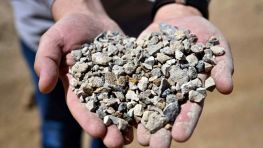
Photo Source: David Becker/Nikkei
Japan will provide technological support to Malaysia for rare-earth mining and refining through its official development assistance (ODA) program, marking the first use of ODA for this purpose between the two countries. The project includes training Malaysian specialists in environmentally friendly refining techniques for neodymium and dysprosium, essential for EV motors. Japan aims to diversify its rare-earth supply chains away from China and secure priority access to Malaysian output, while helping Malaysia develop local expertise and reduce reliance on foreign engineers.
Nikkei Asia:https://asia.nikkei.com/spotlight/supply-chain/japan-to-provide-rare-earth-refining-tech-to-malaysia
▶ Japan’s investment targets include AI, quantum computing and drones
10 Mar, 2026
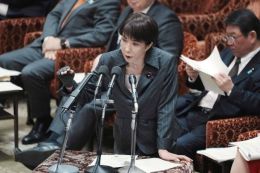
Photo Source: AFP-JIJI
Japan has identified 61 priority products and technologies across 17 strategic sectors for major public-private investment under Prime Minister Sanae Takaichi’s economic strategy. Key areas include physical AI, quantum computing, regenerative medicine, and semiconductors, reflecting economic security concerns and export potential. The government aims to capture over 30% of the global AI robotics market and raise domestic semiconductor sales to ¥40 trillion by 2040, signaling Japan’s push to strengthen strategic industries and global supply chains—an issue closely watched by the European Union as it advances its own industrial and technology sovereignty policies.
Japan times:https://www.japantimes.co.jp/business/2026/03/10/japan-investment-targets-ai-quantum-drones/
▶ Lynas surges 15% after revamp of rare earths deal with Japan
11 Mar, 2026
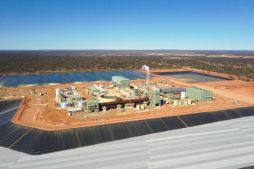
Photo Source: BLOOMBERG
Lynas Rare Earths shares surged after Japan secured a long-term supply deal guaranteeing minimum prices for rare-earth materials used in high-tech industries. Under the agreement, Japan Australia Rare Earths will purchase at least 5,000 tons of neodymium-praseodymium oxide annually until 2038, with a price floor of $110 per kilogram, and will also buy at least half of Lynas’ heavy rare earth output. Backed by Sojitz and Japan Organization for Metals and Energy Security, the deal reflects global efforts to secure non-Chinese supply chains for critical minerals after export controls by China. The move highlights intensifying geopolitical competition over rare-earth resources—an issue with direct implications for the industrial and economic security strategies of the European Union.
Japan times:https://www.japantimes.co.jp/business/2026/03/11/companies/lynas-rare-earths-deal-japan/
▶ Asian exporters like Toyota fear losing out under 'Made in Europe' law
12 Mar, 2026

Photo Source: REUTERS
The European Commission proposed the Industrial Accelerator Act (IAA) to boost EU manufacturing and counter Chinese competition. It links €2 trillion in public funding and procurement to “Made in Europe” content and low-carbon requirements in sectors like autos, clean tech, and heavy industry. While welcomed by EU industry, foreign exporters such as Japanese and South Korean carmakers worry about unclear rules for “trusted partners.” The law also includes restrictions on foreign investment in strategic sectors. The IAA aims to increase EU manufacturing’s GDP share to 20% by 2035 and support low-carbon and cleantech growth, making it a key focus for EU industrial, trade, and climate policy.
Nikkei Asia:https://asia.nikkei.com/economy/asian-exporters-like-toyota-fear-losing-out-under-made-in-europe-law
--------------------------------------------------------------------------------------------------------------------------------------
▶ Denmark's Vestas to build wind turbines in Japan
9 Mar, 2026
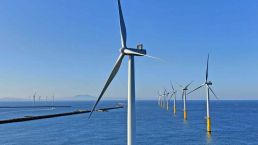
Photo Source: Masayuki Kozono/Nikkei
Vestas, the world’s largest offshore wind turbine manufacturer, plans to build a factory in Japan by fiscal 2029 to produce nacelles and eventually complete wind turbines domestically. The move aims to meet growing demand in Japan and Asia, reduce reliance on imports, lower procurement costs, and strengthen the domestic supply chain, including Japanese companies such as Nippon Steel and Fuji Electric. The project is expected to create jobs, train engineers, and support Japan’s offshore wind expansion, which aligns with the government’s goal of achieving net-zero emissions by 2050 and increasing wind power’s share of electricity generation.
Nikkei Asia:https://asia.nikkei.com/business/energy/denmark-s-vestas-to-build-wind-turbines-in-japan
▶ Japan's IHI, Mitsubishi Heavy ramp up aircraft engine maintenance
10 Mar, 2026
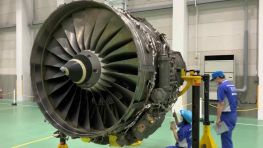
Photo Source: Natsumi Kawasaki/Nikkei
IHI, Mitsubishi Heavy Industries, and Kawasaki Heavy Industries are expanding their aircraft engine maintenance, repair, and overhaul (MRO) businesses to meet growing demand as airlines increase fleets of smaller aircraft. Engine maintenance is highly profitable because engines operate for decades and require continuous servicing and parts replacement. Japan aims to strengthen domestic maintenance capacity, as many aircraft engines are currently serviced overseas. The government also supports this expansion to improve economic security and competitiveness in the global aviation industry.
▶ Japan lenders rush to cash in on country's $50bn chip industry
10 Mar, 2026
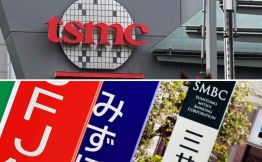
Photo Source: Arisa Moriyama/Nikkei
Mizuho Bank, Sumitomo Mitsui Banking Corporation, and MUFG Bank are expanding lending and support for Japan’s growing semiconductor industry. The banks are creating specialized teams and partnerships to finance chip-related businesses, support suppliers, and connect overseas companies entering Japan. Growth in the sector is driven partly by investments from Taiwan Semiconductor Manufacturing Company in Kyushu. The move reflects increasing demand in the semiconductor market, although banks remain cautious because of technological changes and geopolitical risks.
▶ Japan's Proterial eyes making magnets without heavy rare earths in North America
10 Mar, 2026

Photo Source: Proterial
Proterial, formerly Hitachi Metals, is planning to build production sites in North America and other regions to manufacture electric-vehicle motor magnets that do not use heavy rare-earth metals. The new technology reduces dependence on materials such as dysprosium and terbium, whose supply is dominated by China. The move reflects growing demand from EV and motor manufacturers seeking more secure supply chains, although traditional magnets containing heavy rare earths still offer better performance with current technology.
▶ Mitsui starts greenhouse gas reduction project using rice fields
10 Mar, 2026
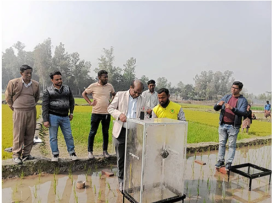
Photo Source: Mitsui & Co.
Mitsui & Co. plans to launch a greenhouse gas reduction project in rice fields in Bangladesh, covering more than 100,000 hectares. By periodically draining and reflooding paddies, the method increases oxygen in the soil and can cut methane emissions by about 30%. The reduced emissions will be certified under the Joint Crediting Mechanism and sold as carbon credits to companies in Japan, where demand is expected to grow with the introduction of the Green Transformation Emissions Trading System.
Asahi:https://www.asahi.com/ajw/articles/16358909
▶ Toyota Advancing Plant-Based Biofuel Development in Fukushima Town That Suffered Nuclear Accident in 2011 in Japan
10 Mar, 2026

Photo Source:Yomiuri
Toyota and partners are developing sorghum-based bioethanol in Okuma, Fukushima Prefecture, a town affected by the 2011 nuclear accident. The fuel absorbs CO₂ during cultivation, making it low-carbon, and will be used in the All Japan Super Formula Championship from April 2026, blended at 10%. Produced by the Research Association of Biomass Innovation for Next Generation Automobile Fuels (raBit), about 270 liters of bioethanol can be made per ton of dried sorghum in a seven-day process. The project aims to support decarbonization, regenerate farmland, and create new local industries, while research continues to reduce costs and explore other plants for biofuel production.
Yomiuri:https://japannews.yomiuri.co.jp/science-nature/technology/20260310-315622/
▶ Japan GDP for Q4 revised up on robust business investment
10 Mar, 2026

Photo Source: Rie Ishii/Nikkei
Japan’s economy grew faster than initially estimated in the last quarter of 2025. Revised data showed GDP increased 1.3%, mainly driven by stronger business investment. However, concerns remain about the economic outlook due to the Middle East conflict, which could affect global growth and fuel costs. Meanwhile, household spending fell in January, raising worries about private consumption. The Bank of Japan is still considering raising interest rates if economic growth continues as expected.
Nikkei Asia:https://asia.nikkei.com/economy/japan-gdp-for-q4-revised-up-on-robust-business-investment
▶ Nippon Steel to raise steel sheet prices 10% on raw material, labor costs
11 Mar, 2026
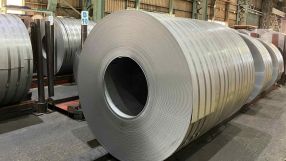
Photo Source: Kosuke Iguchi/Nikkei
Nippon Steel will raise steel sheet prices by about 10% (10,000 yen per ton) starting with shipments in May. The company decided to increase prices because of rising raw material costs, as well as higher labor and logistics expenses. The price hike will apply to all types of steel sheet and will affect retailers and manufacturers that process steel into other products. At the same time, JFE Steel announced a similar price increase. Although steel prices had been falling due to weak demand from the manufacturing and construction sectors, Nippon Steel believes the market may be reaching its lowest point.
▶ Nissan, Uber, Wayve announce robotaxi tie-up, trial in Tokyo by late 2026
12 Mar, 2026
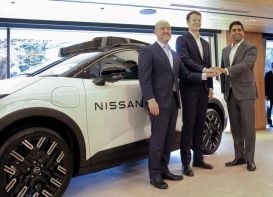
Photo Source: Kyodo
Nissan, Uber, and British startup Wayve are collaborating on a robotaxi project in Tokyo, aiming to launch trial operations in the latter half of 2026. The project will integrate Wayve’s AI-based autonomous driving system into Nissan Leaf electric vehicles, bookable via Uber’s platform.
The partnership is part of Uber and Wayve’s global robotaxi expansion and supports Nissan’s plans to introduce next-generation driver-assistance technology in vehicles from fiscal 2027. Nissan faces a projected net loss of ¥650 billion ($4 billion) this year due to restructuring.
Published: March 2026
The EU-Japan Centre currently produces 5 newsletters :






Joint venture established in 1987 by the European Commission (DG GROW) and the Japanese Government (METI) for promoting all forms of industrial, trade and investment cooperation between the EU and Japan.