The EU-Japan Centre for Industrial Cooperation is currently accepting applications to the call for…


The EU Japan Centre is releasing a weekly press review covering Japan's economic and business matters.
▶ The Greenhouse Gas Budget of Southeast Asia - JAMSTEC scientists co-authored a comprehensive assessment of regional sources and sinks of CO2, CH4 and N2O in Global Biogeochemical Cycles, highlighting the need for urgent action on emission mitigation.
08 Jan, 2026
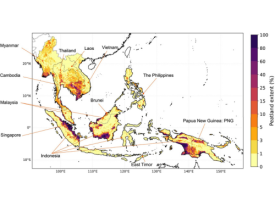 Source: Masayuki Kondo et al.,
Global Biogeochemical Cycles, September 24, 2025
A major international study finds that Southeast Asia is a significant net source of greenhouse gases due to deforestation, peatland degradation, fires, and rapidly rising fossil fuel use. Although the region’s forests, wetlands, and peatlands absorb large amounts of carbon, these natural sinks are overwhelmed by human-driven emissions. Fossil fuel emissions rose by 48% from 2000 to 2019, with coal use surging after 2005. The study warns that without urgent regional cooperation, stronger monitoring systems, and major reductions in land-use and fossil fuel emissions, Southeast Asia will struggle to achieve climate neutrality.
Hiroshima University: https://www.hiroshima-u.ac.jp/en/news/94754
▶ Electronics, Heavy Industry Firms Expand Workforces, Boost Capital Spending on Back of Govt Defense Budget Rise
11 Jan, 2026
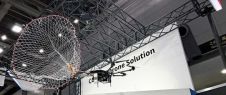 Photo Source: Toshiba
Rising government defense spending in Japan is driving growth in the defense manufacturing sector, prompting companies to expand hiring, facilities, and investment. Firms such as NEC, Mitsubishi Heavy Industries, and Mitsubishi Electric are seeing sharply higher orders under the government’s five-year defense buildup plan and the Takaichi administration’s pro-defense stance. Improved profit margins, promotion of dual-use technologies, and active overseas expansion are transforming defense-related business into a key growth sector for Japanese manufacturers.
Yomiuri: https://japannews.yomiuri.co.jp/politics/defense-security/20260111-303369/
▶ Japan to let private sector use 3 nuclear fusion R&D sites
12 Jan, 2026
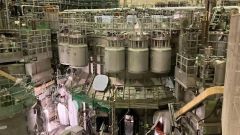 Photo Source: Kento Fukui/ Nikkei
Starting in fiscal 2026, Japan will open national nuclear fusion R&D facilities to private companies to accelerate the development of fusion power for electricity generation by the 2030s. Firms using the facilities will cover consumables and electricity, while the government handles maintenance and management. This public-private collaboration aims to overcome the high costs and risks of fusion research, support startups, and promote commercialization of this carbon-free energy technology.
Nikkei Asia: https://asia.nikkei.com/business/energy/japan-to-let-private-sector-use-3-nuclear-fusion-r-d-sites
▶ Japan deep-sea rare-earth project begins off remote southern island
12 Jan, 2026
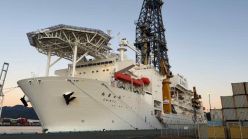 Photo Source: Ryoko Shimonoya/Nikkei
Japan has launched a month-long deep-sea mission near Minamitorishima to test the extraction of rare-earth–rich mud from 6,000 meters below the Pacific Ocean, marking a world-first bulk recovery attempt. Led by JAMSTEC under the government’s SIP program, the project aims to strengthen Japan’s economic security and reduce dependence on China, which dominates global rare-earth supply. While the seabed contains high concentrations of critical rare earths, major technical, cost, and environmental challenges remain, with commercial mining unlikely before around 2030.
Nikkei Asia: https://asia.nikkei.com/business/materials/japan-deep-sea-rare-earth-project-begins-off-remote-southern-island
JAMSTEC (Drilling Vessel Chikyu): https://www.jamstec.go.jp/e/about/press_release/20251212/#c1
▶ Japan current account surplus up 10% in November on goods trade gains
13 Jan, 2026
Japan’s current account surplus in November reached 3.67 trillion yen ($23.2 billion), a record for the month and up 10% from a year earlier, marking the 10th consecutive monthly surplus. The increase was driven by a larger goods trade surplus—exports rose 5.1% to 9.39 trillion yen while imports fell slightly. Primary income from overseas investments remained strong, though the services balance shifted to a deficit due to weaker R&D receipts. Despite a record 3.52 million foreign visitors, the travel surplus declined as Japanese outbound travel also rose.
Kyodo: https://english.kyodonews.net/articles/-/68356
▶ Japan lawmakers eye sovereign wealth fund for $3.2tn in assets
13 Jan, 2026
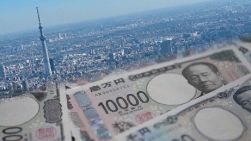 Image: Nikkei
A group of Japanese lawmakers is proposing the creation of a sovereign wealth fund using about ¥500 trillion ($3.2 trillion) in public financial assets, including foreign exchange reserves, pension funds, and assets held by the Bank of Japan. The fund would be professionally managed to generate returns that could help fund policy initiatives such as cutting consumption taxes on food or reducing social insurance premiums. The initiative is led by Komeito and is expected to include members from both ruling and opposition parties. Supporters point to the success of Japan’s Government Pension Investment Fund as a model, while critics warn of governance risks, potential losses to government assets, and argue the funds should instead be used to reduce public debt.
Nikkei Asia: https://asia.nikkei.com/politics/japan-lawmakers-eye-sovereign-wealth-fund-for-3.2tn-in-assets
▶ Japan's Makita targets power tool sales in Africa, South America
13 Jan, 2026
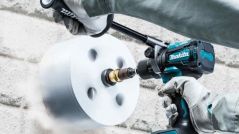 Photo Source: Makita
Makita plans to expand power tool sales in emerging markets, focusing on Africa and South America, as demand in developed countries like Europe and North America slows. The company will invest in a warehouse, repair facility, and sales base in Casablanca, Morocco, and expand storage in Sao Paulo, Brazil. Makita aims to grow African sales 20–30% annually by improving local inventory, after-sales support, and targeting construction, mining, and agricultural sectors, while also exploring M&A and diversifying its product portfolio.
Nikkei Asia: https://asia.nikkei.com/business/companies/japan-s-makita-targets-power-tool-sales-in-africa-south-america
▶ Japanese companies ahead on climate leadership, data shows
14 Jan, 2026
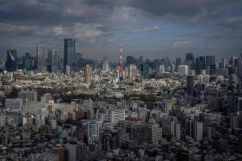 Photo Source: AFP-JIJI
Japanese companies topped an annual global ranking of corporate climate action, with 22% achieving “climate leadership,” according to non-profit CDP. This strong performance was partly due to more Japanese firms having their emissions targets validated by the Science-Based Targets Initiative. The ranking, which assessed over 10,000 companies worldwide on climate, water, and forest-related performance, found that sustainability efforts remain a priority despite geopolitical uncertainty and regulatory rollbacks. Top-performing companies commonly link executive pay to environmental goals, a trend CDP says is becoming firmly established.
Japan times: https://www.japantimes.co.jp/business/2026/01/14/climate-leadership-firms/
▶ The Fourth Meeting of the Japan-France Comprehensive Dialogue on Space
15 Jan, 2026
The Fourth Japan–France Comprehensive Dialogue on Space was held in Tokyo on January 15, 2026, bringing together senior officials from both countries. The meeting covered updates on space policies and discussions on international cooperation, security, and civil and industrial space collaboration. Both sides reaffirmed steady progress under the Japan–France Cooperation Roadmap (2023–2027), highlighted cooperation on space debris, international norms, and satellite systems, and agreed to further strengthen concrete bilateral cooperation across all areas of space.
MOFA: https://www.mofa.go.jp/fp/msp/pagewe_000001_00313.html
▶ Japan's Takaichi and Italy's Meloni to strike deal on space junk removal
16 Jan, 2026
 Photo Source: JAXA
Japan and Italy will agree to cooperate on space debris removal and broader space technology collaboration at a summit in Tokyo between Prime Ministers Sanae Takaichi and Giorgia Meloni. The two countries will establish a space consultation framework to share technology and promote the peaceful and sustainable use of outer space. Cooperation will cover satellites, launch technology, disaster monitoring, the International Space Station, and support for Global South countries. Japan and Italy will also strengthen collaboration under the U.S.-led Artemis lunar program, amid growing U.S.-China competition in space and concerns over China and Russia expanding influence in emerging countries.
--------------------------------------------------------------------------------------------------------------------------------------
▶ SoftBank to debut AI-equipped wireless network for faster processing
10 Jan, 2026
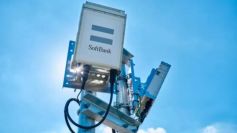 Photo Source: Nikkei
SoftBank Corp. plans to build a new high-speed communications network that integrates mobile base stations with AI data processing, using GPU-powered systems developed with partners such as Nvidia and Arm. The AI-equipped base stations will process data locally through edge AI, reducing reliance on cloud data centers and improving performance for applications like autonomous driving, robotics, and secure data handling. SoftBank aims to begin deployments in 2026 and may expand nationwide, positioning base stations as decentralized mini data centers to meet rapidly growing AI demand while improving network efficiency and power use.
Nikkei Asia: https://asia.nikkei.com/business/softbank/softbank-to-debut-ai-equipped-wireless-network-for-faster-processing
▶ Japan’s ANA to Introduce Nationwide Logistics Service Using Drones, Will Be Used to Deliver Supplies in Remote Areas
10 Jan, 2026
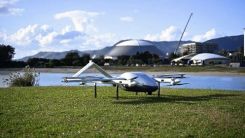 Photo Source: ANA Holdings
ANA Holdings plans to launch a nationwide drone logistics service by fiscal 2028, using drones capable of carrying 50 kg up to 1,600 km. The service will deliver medicines and daily necessities to remote islands during normal times and provide disaster relief to isolated areas. Bases with a 500 km coverage radius will be established across Japan, with operations largely automated and monitored remotely. The initiative aims to create a new social infrastructure for logistics, building on prior demonstration trials.
Yomiuri: https://japannews.yomiuri.co.jp/business/companies/20260110-303098/
▶ Honda to debut electric two-wheeler in Vietnam and Thailand
10 Jan, 2026
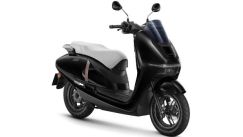 Photo Source: Honda Motor
Honda will launch its new UC3 electric scooter in Vietnam and Thailand this spring, targeting consumers shifting from gas-powered two-wheelers ahead of Vietnam’s planned restrictions on gasoline scooters. The UC3 features a fixed lithium iron phosphate battery, up to 122 km range, and CHAdeMO fast charging. Production will start in Thailand and expand to Vietnam, with Honda also installing charging stations in major cities. The move helps Honda maintain its dominant market share as gas vehicle sales face regulatory limits.
Nikkei Asia: https://asia.nikkei.com/business/transportation/honda-to-debut-electric-two-wheeler-in-vietnam-and-thailand
▶ Shinkansen operator recycles retired cars to extract aluminum alloys
12 Jan, 2026
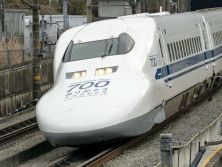 Photo Source: Kyodo
JR Central is recycling retired Shinkansen train cars to extract high-purity aluminum using a patented method. The aluminum, freed from coatings and residues, is repurposed for new train cars, buildings, and products like baseball bats and spoons. This recycling process reduces CO2 emissions by 97% compared with producing new aluminum, supporting JR Central’s goals for carbon neutrality and resource circulation. The initiative overcomes previous challenges in removing paint, insulation, and adhesives from retired trains.
Kyodo: https://english.kyodonews.net/articles/-/68311
▶Honda diversifies chip supply to lower China dependency
11 Jan, 2026
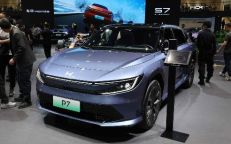 Photo Source: Shinya Sawai/ Nikkei
Honda is diversifying its semiconductor suppliers, including using Japanese company Rohm, to reduce reliance on Chinese chipmakers after a supply cutoff by Nexperia disrupted production and cost the company around ¥150 billion ($950 million) in operating profit. The new supply chain will support mass-produced cars starting this month, helping Honda avoid future disruptions caused by geopolitical or supply issues.
Nikkei Asia: https://asia.nikkei.com/business/automobiles/honda-diversifies-chip-supply-to-lower-china-dependency
▶ Nippon Life seeks renewable power only from truly ‘green’ providers
12 Jan, 2026
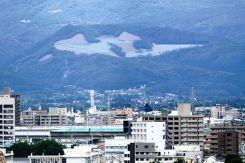 Photo Source: Asahi
Nippon Life Insurance Co. will become the first major Japanese company to use the Nature Conservation Society of Japan’s (NACS-J) environmental rating system to guide its purchase of renewable electricity. The system evaluates about 510 wind energy providers on environmental impact, including effects on threatened species and local opposition. Nippon Life plans to switch entirely to renewable energy by 2030 and will only buy electricity from top-rated providers that address climate change, biodiversity, and community concerns. The insurer has already selected a wind farm operated by a Kyushu Electric Power subsidiary and will also consult NACS-J on solar energy projects. This move reflects growing corporate responsibility in Japan amid the government’s goal of net-zero greenhouse gas emissions by 2050.
Asahi: https://www.asahi.com/ajw/articles/16279083
▶ JERA Signs Winter LNG Supply Agreement with Woodside
15 Jan, 2026
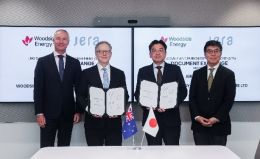 Photo Source: JERA
JERA has signed a five-year LNG sale and purchase agreement with Woodside Energy Trading Singapore to secure winter LNG supply for Japan starting in 2027. Under the deal, JERA will receive three LNG cargoes per year (about 200,000 tons annually) during the December–February peak demand period, sourced from Woodside’s global portfolio, including Australia’s Scarborough project. The agreement strengthens Japan’s winter energy security by ensuring stable LNG supply to support gas-fired power generation amid growing seasonal demand fluctuations.
JERA: https://www.jera.co.jp/en/news/information/20260115_2334
Published: January 2026
The EU-Japan Centre currently produces 5 newsletters :






Joint venture established in 1987 by the European Commission (DG GROW) and the Japanese Government (METI) for promoting all forms of industrial, trade and investment cooperation between the EU and Japan.