The EU-Japan Centre for Industrial Cooperation is currently accepting applications to the call for…



The EU Japan Centre is releasing a weekly press review covering Japan's economic and business matters.
▶ Japan builders turn down big projects because of labor crunch: poll
17 Jan, 2026
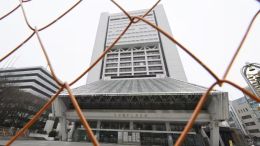 Photo Source: Yuji Murakami/Nikkei
Nearly 70% of large and midsize Japanese construction companies say they cannot take on new large-scale projects in fiscal 2026 due mainly to severe labor shortages and stricter overtime regulations. The lack of skilled workers and subcontractors is causing project delays, rising costs, and cancellations of major redevelopment plans. With construction accounting for about 30% of Japan’s GDP, the capacity crunch threatens public infrastructure projects and economic growth. Companies are turning to digitalization and AI to improve productivity, while the industry is calling for government support and regulatory reform to ease labor constraints.
Nikkei Asia: https://asia.nikkei.com/business/construction/japan-builders-turn-down-big-projects-because-of-labor-crunch-poll
▶ Japan, India agree to cooperate in rare earth supply chain diversification
17 Jan, 2026
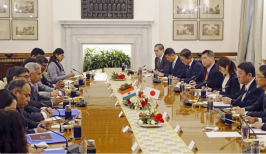 Photo Source: Kyodo
Japan and India agreed to launch a private-sector economic security dialogue in early 2026 to diversify supply chains for strategic materials such as semiconductors and rare earths, reducing dependence on China. The agreement was reached during talks between their foreign ministers in New Delhi and includes cooperation through the Quad framework and a new working-level dialogue on artificial intelligence. The move reflects shared concerns over China’s export controls and a broader effort to strengthen strategic and economic ties in the Indo-Pacific.
Yomiuri: https://mainichi.jp/english/articles/20260117/p2g/00m/0bu/006000c
▶ Japan and EU affirm cooperation for stable supply of critical minerals
22 Jan, 2026
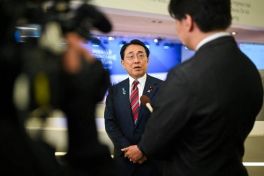 Photo Source: AFP-JIJI
Japan’s Industry Minister Ryosei Akazawa reaffirmed cooperation with the European Commission to secure stable supplies of critical minerals, including rare earths, and agreed to accelerate Japan-Europe collaboration with financial support. During the World Economic Forum in Davos, he also held talks with officials from Britain, France, and the United States, sharing concerns over China’s export restrictions, addressing U.S. tariffs, and advancing coordination on Japan’s $550 billion investment and loan plan in the U.S. Japan Times:https://www.japantimes.co.jp/business/2026/01/22/economy/japan-eu-talks-mineral-supply/
▶ Japan's Takaichi embraces consumption tax cut on food as election looms
20 Jan, 2026
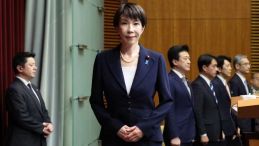 Photo Source: Ken Suzuki/Nikkei
Japanese Prime Minister Sanae Takaichi has signaled openness to a two-year suspension of the consumption tax on food products, following its inclusion in the ruling coalition’s election platform ahead of a snap lower house election on February 8. The proposal, which could reduce government revenue by about ¥5 trillion, would require further cross-party discussions before implementation. While underscoring the consumption tax’s role in funding social security, the government is weighing the measure alongside alternative support such as refundable tax credits, reflecting Japan’s broader policy debate over inflation relief, fiscal sustainability, and public finance stability.
▶ Japan gov't still sees tariff impact on car sector amid recovery
22 Jan, 2026
 Photo Source: Mainichi
The Japanese government reported that higher U.S. tariffs are still weighing on the automotive sector, even as the overall economy shows moderate recovery supported by solid consumer spending and capital investment. In its January monthly economic report, the Cabinet Office noted that the impact of U.S. trade policies is seen mainly in the auto industry. Although shipments of Japanese cars to the U.S. have rebounded in volume since the tariff reduction last September, export prices remain below pre-tariff levels, putting pressure on corporate profits. Despite this, key economic indicators such as private consumption, capital spending, and exports remain steady, and the government maintained its overall assessment of the economy for the fifth consecutive month.
Mainichi: https://mainichi.jp/english/articles/20260122/p2g/00m/0bu/038000c
▶ Japan steel output falls to 56-year low on influx of cheap China imports
23 Jan, 2026
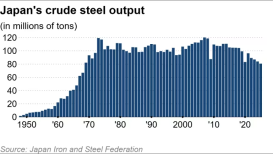 Source:Japan Iron and Steel Federation
Japan’s crude steel output fell 4% in 2025 to 80.67 million tons, the lowest since 1969, as domestic demand weakened due to construction delays, labor shortages, and declining automobile sales. China’s large steel exports and oversupply of cheap steel have intensified global market pressure, while protectionist measures in the U.S., EU, and South Korea have further constrained exports. Japan’s steel shipments fell 4.2% to 30.08 million tons, marking a second consecutive decline. In response, Japanese steelmakers, including Nippon Steel and JFE Holdings, are accelerating expansion into overseas growth markets such as the U.S. and India. Nippon Steel aims to reach 100 million tons of annual crude steel through capacity expansion outside Japan, while JFE is investing in Indian steel assets to serve local demand. Industry leaders emphasize that maintaining production scale is essential to preserve technological capabilities amid stagnant domestic demand and global market challenges.
--------------------------------------------------------------------------------------------------------------------------------------
▶ Let it grow: Panasonic's plant formula boosts CO2 absorption
17 Jan, 2026
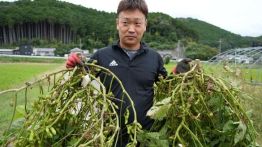 Photo Source: Yuki Misumi/Nikkei
Panasonic Holdings plans to launch Novitek, a plant growth formula, as early as next fiscal year. Novitek increases plants’ ability to absorb carbon dioxide and boosts crop yields, even under extreme heat. Field tests show yield increases of 10–20% on average, with larger gains for some crops. The biostimulant may also reduce fertilizer use and related carbon emissions. Panasonic is considering using Novitek to generate carbon credits and expand its application to trees, seaweed, and other carbon-absorbing vegetation as part of its long-term emissions reduction strategy.
Nikkei Asia: https://asia.nikkei.com/business/biotechnology/let-it-grow-panasonic-s-plant-formula-boosts-co2-absorption
▶ Otsuka Pharmaceutical Expands On-Site Solar Power Facilities at Factory Premises
Accelerating Carbon-Neutral Initiatives
19 Jan, 2026
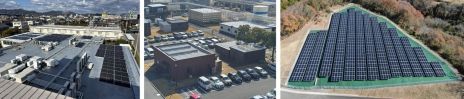
Photo Source: Otsuka Pharmaceutical
Otsuka Pharmaceutical has launched new solar power systems at its Tokushima Second Factory and expanded systems at five other domestic factories, becoming operational between September 2024 and December 2025. These efforts are expected to reduce annual CO₂ emissions by approximately 3,189 tons across six factories. About 84% of Otsuka’s domestic electricity consumption now comes from CO₂-free sources. As part of its sustainability strategy, the company continues to expand renewable energy adoption, improve energy efficiency through centralized energy management, and promote CO₂ reductions across its supply chain, including the use of SAF for air cargo. These initiatives support Otsuka’s commitment to achieving carbon neutrality and reducing environmental impact.
Otsuka pharmaceutical: https://www.otsuka.co.jp/en/company/newsreleases/2026/20260119_1.html
▶ Mitsubishi Electric Develops Multi-agent AI for Expert-level Decisions through Adversarial Debate
20 Jan, 2026
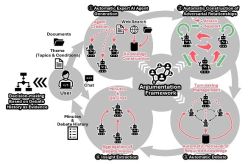 Photo Source: Mitsubishi Electric
Mitsubishi Electric has developed the manufacturing industry’s first multi-agent AI that uses adversarial debates among expert AI agents to enable fast, transparent, and expert-level decision-making. Built on its Maisart® AI program, the technology applies an argumentation framework to generate evidence-based conclusions, addressing challenges such as complex trade-offs, reliance on individual experts, and the lack of transparency in AI reasoning. The solution is designed for high-stakes applications including security analysis, production planning, and risk assessment, opening new possibilities for trusted AI adoption in global enterprise environments.
Mitsubishi Electric: https://www.mitsubishielectric.com/en/pr/2026/0120/
▶ Toyota aims to use 30% recycled material in 2030, eyeing EU regulations
21 Jan, 2026
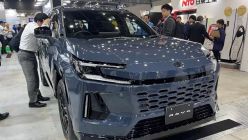 Photo Source: Kyohei Suga/Nikkei
Toyota plans to increase the recycled material content of its vehicles to at least 30% by weight from 2030, up from the current 20–25%, to prepare for expected EU regulations. The automaker is expanding the use of recycled steel, aluminum, and especially plastics recovered from end-of-life vehicles, starting with easier-to-adapt components like interiors. Toyota is also designing cars to be more recyclable and working with partners across its supply chain. Other automakers, including Honda, Nissan, and Volkswagen, are pursuing similar goals as global regulations tighten and demand for recycled materials grows.
Nikkei Asia: https://asia.nikkei.com/business/automobiles/toyota-aims-to-use-30-recycled-material-in-2030-eyeing-eu-regulations
▶ Mos Food Unveils AI System for Drive-Through Orders
21 Jan, 2026
 Photo Source: JIJI
Mos Food Services Inc. unveiled an AI-based system on Wednesday to handle drive-through orders at its restaurants, aiming to boost efficiency and address labor shortages. The system uses conversational AI to take orders and make menu suggestions, such as promoting limited-time items. Mos Food plans to introduce the technology at multiple outlets in fiscal 2026, following a demonstration at a store in Yoshikawa, Saitama Prefecture.
JIJI: https://jen.jiji.com/jc/eng?g=ind&k=2026012100979
▶ Toyota, other Japan automakers to share chip data as supply risks grow
22 Jan, 2026
 Photo Source: Nikkei
Japanese automakers and major chipmakers will create a shared database of automotive semiconductors to strengthen supply chain resilience against geopolitical risks and disasters. Covering up to 80–90% of chips used by Japanese carmakers, the system will track specifications, production timelines, and origins using blockchain for security. Led by industry groups and set to launch by April, the initiative aims to help automakers quickly identify risks and secure alternatives, reflecting lessons from recent chip shortages as semiconductors become increasingly vital for autonomous and AI-driven vehicles.
Nikkei Asia: https://asia.nikkei.com/spotlight/supply-chain/toyota-other-japan-automakers-to-share-chip-data-as-supply-risks-grow
▶ MFTBC and Hon Hai Technology Group (Foxconn) announce plan to create new Bus OEM in Japan
22 Jan, 2026
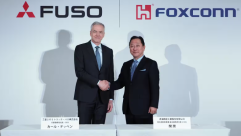 Photo Source: Foxconn
Mitsubishi Fuso Truck & Bus Corporation (MFTBC) and Foxconn are forming a standalone bus company focused on developing, manufacturing, and selling zero-emission buses, starting with Foxtron’s MODEL T and MODEL U. Katsuto Kora, currently Head of FUSO BUS at MFTBC, will serve as CEO. The buses will be built in Toyama under the FUSO brand, combining MFTBC’s long-standing automotive expertise with Foxconn’s advanced EV technology and global network. The new company aims to accelerate electrification, meet domestic and international market needs, and continue improving conventional diesel buses. The joint venture is expected to close in the second half of 2026, subject to approvals.
▶ TEPCO's just-restarted nuclear plant halted after fuel-control snag
23 Jan, 2026
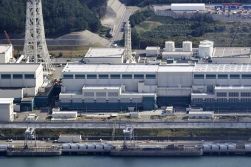 Photo Source: Kyodo
Tokyo Electric Power Company (TEPCO) halted the No. 6 reactor at its Kashiwazaki-Kariwa nuclear power plant—the largest nuclear plant in Japan—after an alarm was triggered during control rod withdrawal, about five hours after it was restarted. This was the first reactor TEPCO has restarted since the 2011 Fukushima disaster. The reactor is stable, with no impact outside the facility, but a thorough investigation will take an unspecified time. The plant is central to TEPCO’s efforts to improve finances and Japan’s push for increased nuclear power amid energy security concerns.
Kyodo: https://english.kyodonews.net/articles/-/69007
▶ KDDI's AI Data Center in Osaka Begins Operations
23 Jan, 2026
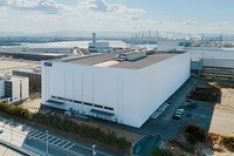 Photo Source: KDDI
Japanese telecom company KDDI has started operating a generative AI-focused data center in Sakai, Osaka, on the former site of Sharp’s LCD plant. Built in under a year using existing power and cooling infrastructure, the 57,000-square-meter facility uses Nvidia’s latest AI chips and is fully powered by renewable energy. Starting in April, it will primarily support the pharmaceutical industry, aiming to speed up electronic medical record analysis and reduce costs.
JIJI: https://jen.jiji.com/jc/eng?g=ind&k=2026012300344
▶ Mazda elevates China-made EVs in global strategy rethink
23 Jan, 2026
 Photo Source: Mazda Motor
Mazda is delaying Japanese production of its first in-house global EV to 2029 and will emphasize exports from its China-based Changan Mazda joint venture, using cost-effective local batteries. Policy rollbacks in the U.S. and EU have eased the urgency for EV adoption, though European sales remain strong, with EVs accounting for 19% of new cars in 2025. Mazda’s flexible approach allows it to adjust in-house EV launches while prioritizing competitive, Chinese-produced models for global markets.
Published: January 2026
The EU-Japan Centre currently produces 5 newsletters :






Joint venture established in 1987 by the European Commission (DG GROW) and the Japanese Government (METI) for promoting all forms of industrial, trade and investment cooperation between the EU and Japan.